How do we teach at our school?
Co-curricular activity
Not merely a place to study, but a place to learn how to live
We do not teach children only what is in books experiences outside the school matter just as much. Through excursions, yoga, music, dance and cultural programmes, a child develops physically, mentally and emotionally.
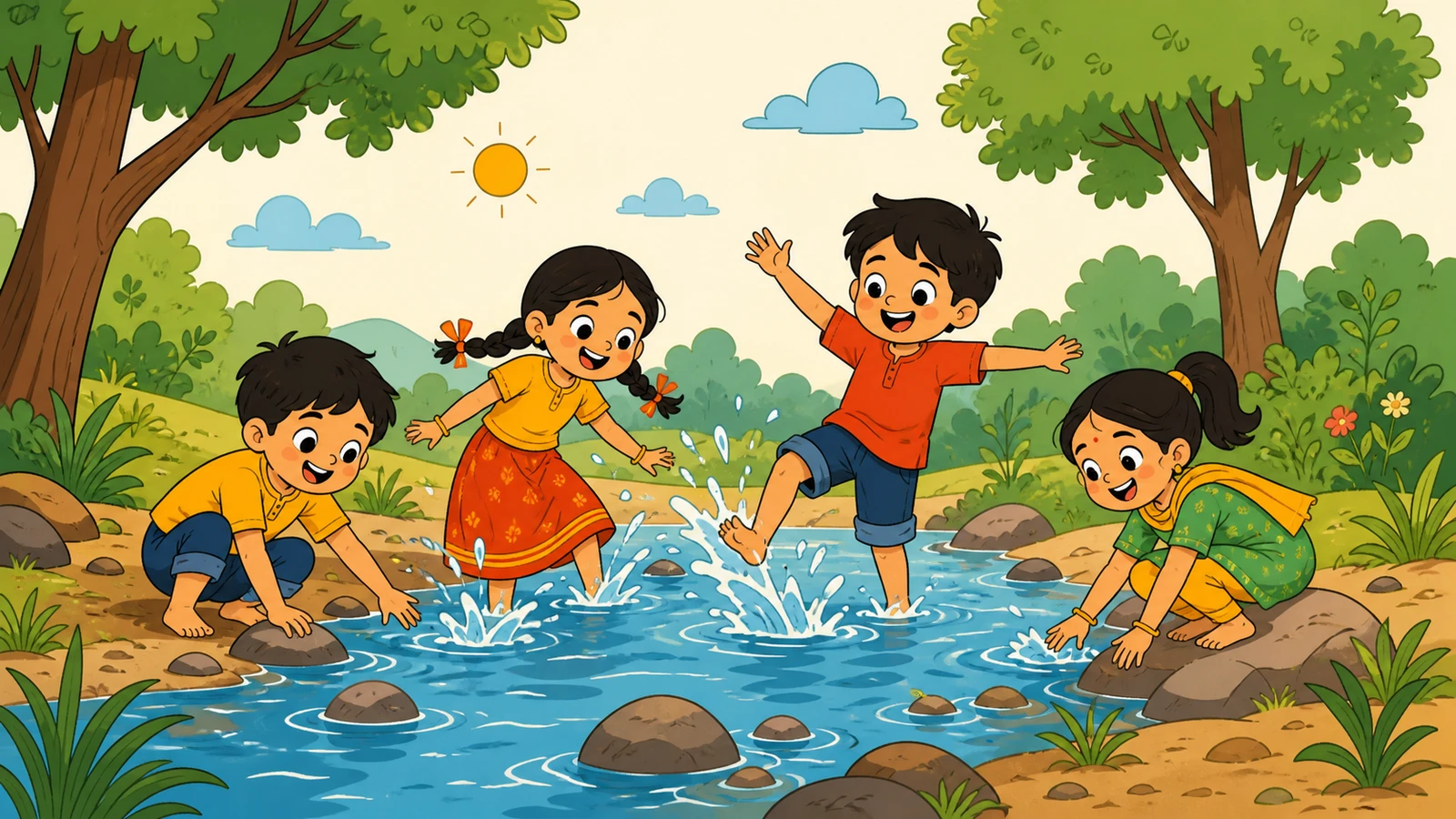
Not just educational trips learning from nature
A living medium for learning from the natural world.
Trekking an education in adventure
An activity that builds patience and self-confidence.
Music and dance
Room for expression and for creativity.
Yoga, meditation and sport
Support for a healthy body and a quiet mind.
Cultural programmes with a purpose
A connection to tradition, and confidence on a stage.
T.L.M.
T.L.M
(Teaching Learning Method)
- Discussion
- Children's songs
- Drama, story, dialogue
- Experiment
- Games
- Excursions
T.L.M
(Teaching Learning Materials)
- Worksheets
- Cards
- Various apparatus
- Blocks
- Excursions (visit-based worksheets)
Games
Games are not merely running and jumping; they are how a child comes to know their own body, mind and sense of co-operation. Physical games build a healthy life for the body, while games of the mind develop attention, logic and quickness. Together they are as necessary to a child's whole development as food.
Physical games
Walking Running Jumping Pulling Throwing Catching Receiving Climbing Descending Lifting Leaping Pressing and pushing Balancing
Games of the mind
Memory Reasoning Retention Inference Observation Imagination Comparison Invention Discernment Language Judgement
The methods we have adopted
For a child's all-round development we follow teaching methods chosen with care grounded in experience, and keeping the child at the centre.
Group method
Taking part in a group, children learn co-operation, listening and understanding.
Choosing the subjects
Subject matter is chosen from children's interests and their experience of life.
Teaching in the mother tongue
Education in the child's own language, so understanding is easy and alive.
The absence of competition
Learning in a calm, friendly atmosphere, without ego or pressure.
Teaching without classrooms
No confining walls every corner of the school becomes a place of learning.
Celebrating the seasons
Through the natural cycle and the sight of it, a child connects with their environment.
Eating together
Eating together gives rise to fellow-feeling and to values free of division.
Here begins the true journey of childhood…
To learn while playing, to grow independently this is the real mark of our education. Today we are here; tomorrow we will come with new journeys still.
Contact
Come, meet a school like that…
To visit the school, ask about admission, or simply talk you are welcome any time.